

Buvicid K 370 SC
Liquid spray for controlling fungal diseases
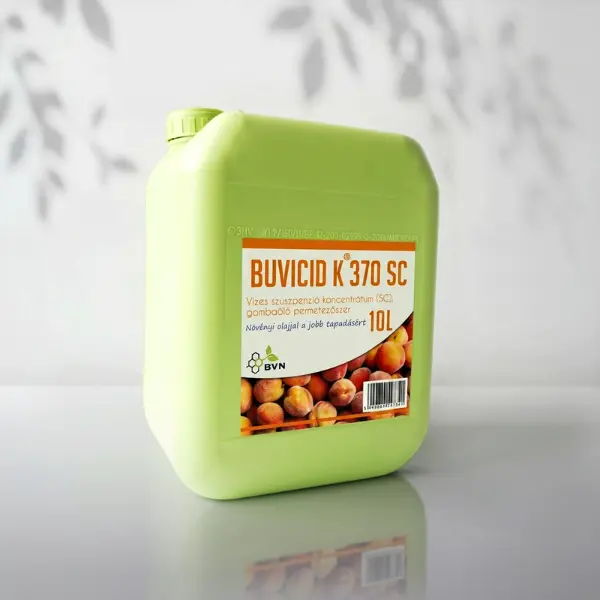
Everything you need to know in one place
Product Details
Active ingredient content: 372 g/l (31.0 ± 1.5% w/w) captan.
Additional ingredient: 204 g/l sunflower oil
Formulation: Aqueous suspension concentrate (SC)
Marketing category: I.
Hazard to aquatic organisms: highly hazardous.
Hazard to bees: not subject to labeling requirements.
Fire hazard classification: not subject to labeling requirements.
Shelf Life: The product retains its physical and chemical properties for at least two years when stored in its original, unopened packaging in a dry, cool place in a properly regulated pesticide storage facility. The manufacturer guarantees a shelf life of 3 years.
Packaging volumes: 1; 5; 10; 20; 1000 liters
Application
Pome fruits (apples, pears, quinces, and medlars) — to control scab and moniliosis, the product may be used up to 10 times during a growing season, with an interval of at least 7 days between treatments.
The recommended dose is 2.2–3.0 L/ha, applied with a spray volume of 800– 1,500 L/ha. Treatments may be carried out from budbreak (BBCH 07) until the final fruit size is reached (BBCH 80).
Stone fruits (cherries and sour cherries) — against stigmina and moniliosis, the product may be used up to 3 times per growing season, with an interval of at least 7 days between treatments.
The recommended dose is 2.2–3.0 L/ha, applied with a spray volume of 800– 1,200 L/ha. Treatments may be applied from budbreak (BBCH 07) until the fruit reaches the size of a green pea (BBCH 71–74).
Stone fruits (apricot, peach, nectarine, and plum) — against Tafrina leaf curl, Stigmina leaf spot, and Monilinia leaf spot, the product may be used up to 4 times per growing season, with an interval of at least 7 days between treatments.
The recommended dose is 2.2–3.0 L/ha, applied with a spray volume of 800– 1,200 L/ha. Treatments may be carried out from budbreak (BBCH 07) until 70– 80% of the fruit has reached its final size (BBCH 77–78).
Aerial application: not permitted
Occupational Safety
For applicators: protective clothing, protective headgear, safety goggles, FFP2D particulate-filtering half-mask, protective footwear, protective gloves
In the event of poisoning, an allergic reaction, or if such a condition is suspected, work must be stopped immediately; after providing first aid on site, medical care at a healthcare facility must be arranged.
Occupational health waiting period: 4 days
First Aid
Treatment: symptomatic supportive care
Antidote: there is no specific antidote
Food safety waiting period:
- pome fruits (apple, pear, quince, medlar): 21 days
- stone fruits (cherry, sour cherry, plum, nectarine, peach, apricot): 21 days
Pre-harvest interval:
- pome fruits (apple, pear, quince, medlar): 21 days
- stone fruits (sweet cherry, sour cherry, plum, nectarine, peach, apricot): 21 days
Documents
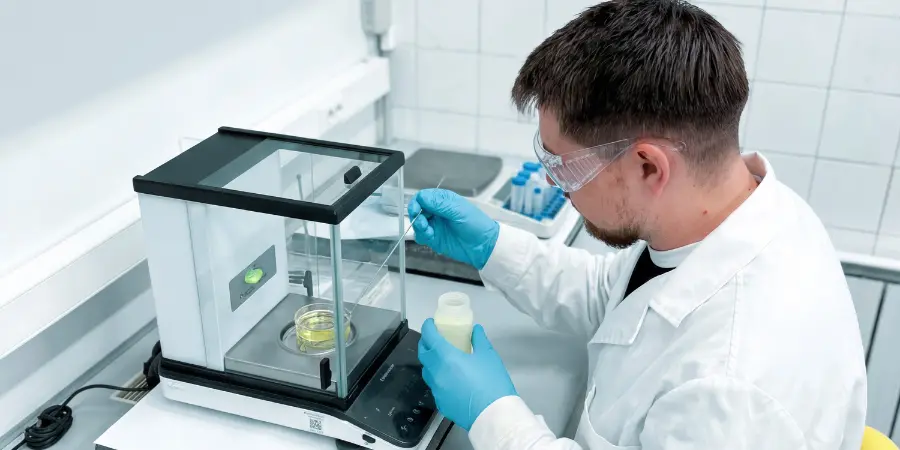
Science Behind Effective Solutions
In our in-house laboratory, we continuously develop and test our products to ensure the highest standards of efficacy and safety.