

Vegesol eReS
A liquid spray containing copper and sulfur, supplemented with sunflower oil, for the control of fungal and bacterial diseases
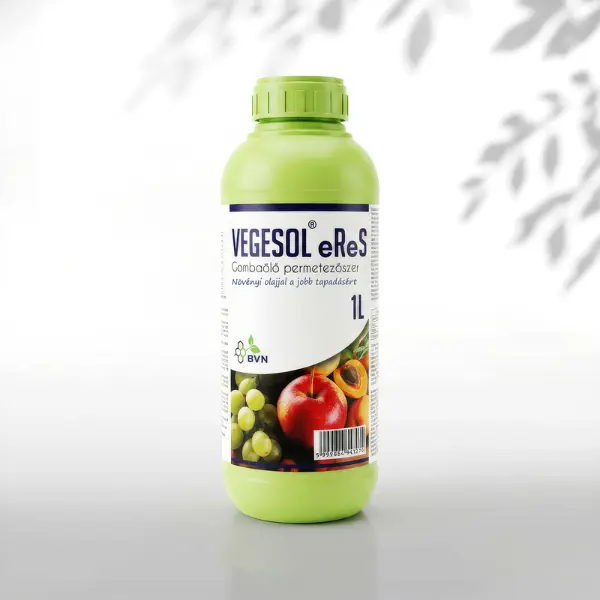
Everything you need to know in one place
Product Details
Active ingredient content:
- 150 g/l copper(II) hydroxide (11.5 ± 1.0 m/m%), copper metal equivalent: 95 g/l
- 300 g/l sulfur (23.0 ± 1.5 m/m%)
Additional ingredient: 230 g/l sunflower oil (18.0 m/m%)
Marketing category:
- III: 0.01; 0.02; 0.05; 0.2; 0.5; 1 liter
- I: 2.5; 5; 10; 20; 25 liters
Hazard to aquatic organisms: highly hazardous
Hazard to bees: moderately hazardous
Fire hazard classification: Not subject to labeling requirements
Shelf life: Retains its physical and chemical properties for two years when stored in the original sealed packaging in a dry, cool place in a properly regulated pesticide storage facility. Shelf life guaranteed by the manufacturer: 3 years
Packaging volumes: 0.01; 0.02; 0.05; 0.2; 0.5; 1; 2.5; 5; 10; 20; 25; 1000 liters
Application
Vegesol eReS is a copper- and sulfur-containing contact product that can be used to control a range of fungal and bacterial plant diseases.
For home garden spraying, use 40–50 ml of Vegesol eReS per 10 liters of water for crop treatment and 100 ml for wash-off spraying.
For pome fruit trees — to control scab, bacterial and fungal branch dieback, and apple powdery mildew—the product can be applied at a dose of 4.0 L/ha or a concentration of 0.4–0.8%, with a spray volume of 500–1,000 L/ha. Against fire blight, the recommended dose is 4.0 L/ha at a concentration of 0.4–0.8%, applied with a spray volume of 800–1,500 L/ha.
Stone fruits — against bacterial and fungal branch dieback, leaf spot, tafrina, and apiognomonium, the product can be used at a dose of 5.0 l/ha or at a concentration of 0.4–0.6%, applied with a spray volume of 800–1,500 l/ha.
Gooseberry – against American powdery mildew and Drepanopezis leaf spot – the product can be applied at a dose of 5.0 L/ha or a concentration of 0.6–1.0%, with a spray volume of 500–800 L/ha.
Red and black currants – against American powdery mildew, European powdery mildew, and mycosphaerella leaf spot – the product can be applied at a dose of 5.0 L/ha or a concentration of 0.6–1.0%, with a spray volume of 500–800 L/ha.
Raspberries – against branch diseases, the product can be applied at a dose of 5.0 L/ha or a concentration of 0.6–1.0%, with a spray volume of 500–800 L/ha.
Grapes – To control downy mildew and powdery mildew, the product can be applied at a dose of 4.0–5.0 l/ha or a concentration of 0.4–0.6%, with a spray volume of 800–1,000 l/ha.
Aerial application: not permitted
The application rate, number of applications and pre-harvest interval must be determined according to the current authorization document for the respective crop.
Occupational Safety
For applicators: protective clothing, protective gloves, face shield, respiratory protection, protective footwear.
Occupational health waiting period: 0 days
First Aid
In case of skin contact, wash the skin thoroughly with water and soap.
In case of eye contact, immediately rinse the eyes with plenty of water for at least 15–20 minutes.
In case of ingestion, if the affected person is conscious, rinse their mouth with water and seek medical attention. DO NOT consume castor oil, milk, or fatty foods! If a toxic amount enters the body, as a first-aid measure, the patient may be given egg white to drink, which binds the copper in the form of copper albumin; however, it is important to ensure that this is subsequently removed from the stomach!
Treatment: symptomatic and supportive care
Antidote: recommended chelating agents include D-penicillamine, dimercaprol (BAL), CaNa₂-EDTA, and DMPS; in cases of penicillamine intolerance, medications containing the active ingredient trientine (e.g., Cuprior)
Food safety waiting period:
- stone fruits, grapes, berries: 21 days
- pome fruits: 10 days
- cucumbers: 5 days
- cucumbers (canned): 3 days
Documents
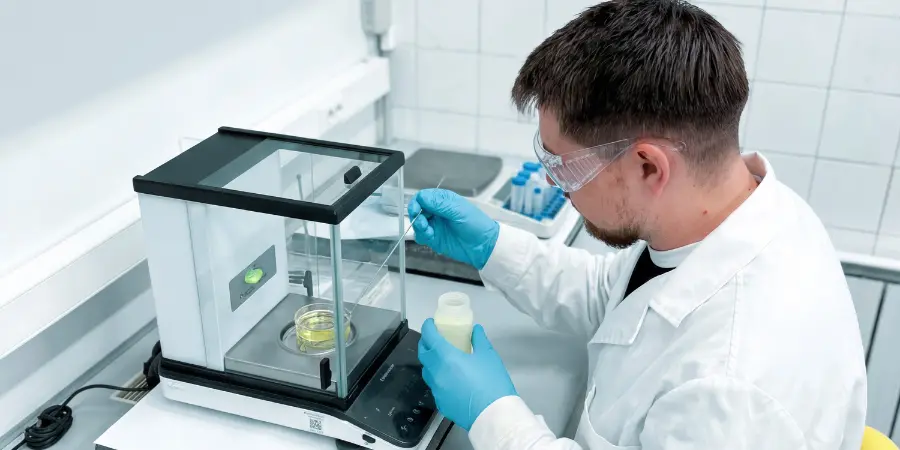
Science Behind Effective Solutions
In our in-house laboratory, we continuously develop and test our products to ensure the highest standards of efficacy and safety.