

An honest, professional perspective on dormant spraying
The purpose of late-winter dormant spraying
The harmful organisms that appear during the growing season—including pathogenic fungi, bacteria and, of course, animal pests—remain present in our orchards during winter. To prevent subsequent damage, their numbers should be reduced as much as possible in early spring. If this is successful, we can begin the growing season with a clean slate and have a better chance of preventing diseases and pests from spreading later.
Although this general principle is valid, it does not work against every pathogen and pest. Late-winter dormant spraying can only destroy or reduce harmful organisms that overwinter on the branches and shoots of trees and shrubs. It has no effect on those that overwinter in the soil or among fallen leaves.
When should the treatment be carried out?
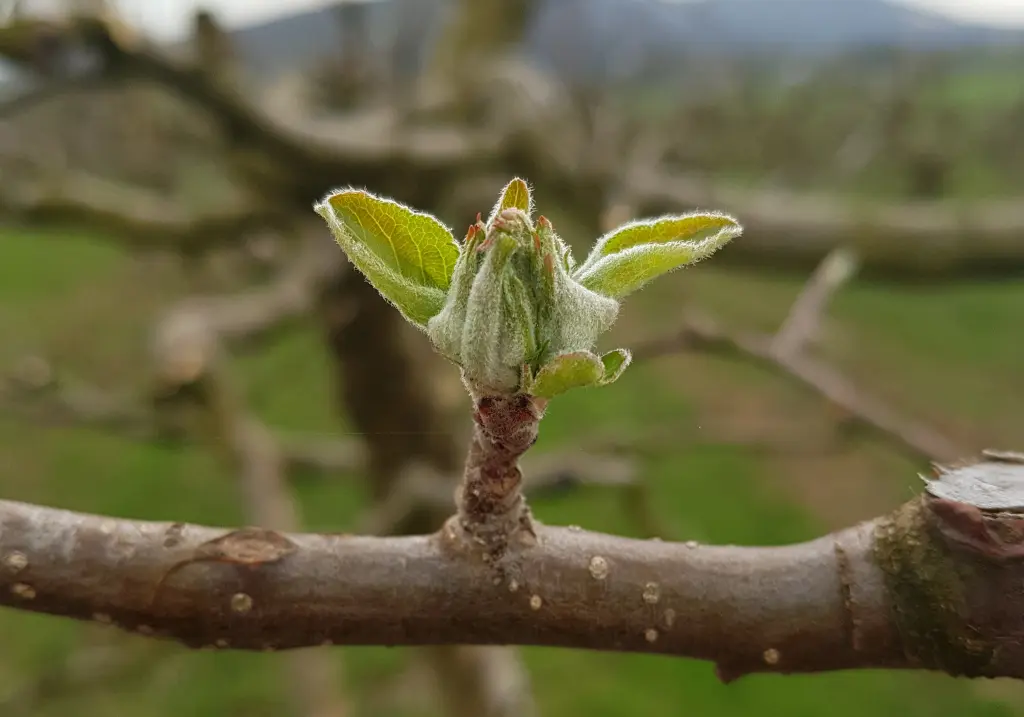
The timing of dormant spraying is crucial to achieving good efficacy. As a general rule, the treatment should be carried out after the winter frosts but before bud break. The best results can be expected if treatment is delayed until vegetation is about to become active, as pests and pathogens also begin their more active life processes at this time. In certain cases, such as apple powdery mildew, the pathogenic fungus overwinters between the bud scales. Spraying should therefore be postponed until the buds begin to open, allowing the spray solution to reach their interior.
What should be used for late-winter dormant spraying?
The answer depends on the problem being addressed. If large numbers of animal pests—such as mites, aphids or scale insects—are present on the woody parts of dormant plants, a product with a high oil content should be selected. If the objective is to prevent fungal or bacterial diseases, a dormant-spray fungicide containing copper and sulphur should be used. Drawing on several decades of professional experience, BVN’s development team has created solutions for controlling overwintering pests and pathogens in late winter.
Among oil-based products, we recommend Vegarep® EC. Thanks to its 85% vegetable oil content, it controls all developmental stages of animal pests overwintering on woody plant parts with excellent efficacy by inhibiting their respiration. Environmentally responsible crop protection solutions are receiving increasing attention. Vegarep® stands out among dormant-spray products because it is based exclusively on vegetable oil. According to its authorisation document, Vegarep® can be used on all fruit species during dormancy at a concentration of 3%: 300 ml of Vegarep® per 10 litres of water. In orchards, the required spray volume is 700–1,000 litres per hectare when the treatment is not applied using a spray gun.
A fungicidal dormant-spray product should contain multiple active ingredients to provide effective control against a wide range of pathogens. As a result of BVN’s development work, Vegesol® eReS combines copper hydroxide and sulphur in a ready-to-use commercial formulation containing vegetable oil, which provides outstanding adhesion for both fungicidal active ingredients. Copper and sulphur give the product a broad spectrum of activity against various pathogenic fungi. Thanks to its added formulation components, the oil-based formula creates a slowly degrading film on the surface, ensuring the prolonged biological efficacy of the active ingredients.
This patented technology makes BVN products unique. It explains why Vegesol® eReS provides excellent biological efficacy against downy mildew-type pathogens despite its lower copper load. The same efficacy-enhancing property also applies to the sulphur active ingredient. It is also worth noting that sulphur is effective not only against powdery mildew fungi but also has a considerable secondary effect in reducing mite populations. Both products are freely available and authorised for use in organic farming.
The table below shows the fruit species for which late-winter dormant spraying with the Vegesol® eReS fungicide is particularly important, together with the recommended treatment timing.
| Fruit species | Disease | Treatment timing |
|---|---|---|
| Apple | Apple powdery mildew | After bud break, at the mouse-ear stage |
| Fire blight | ||
| Nectria canker | ||
| Pear | Pear scab | A few days before bud break |
| Sweet and sour cherry | Brown rot caused by Monilinia | Up to bud break |
| Apricot | Pseudomonas bacterial disease | Up to bud break (and also in autumn) |
| Shot hole disease | Up to bud break | |
| Peach | Peach leaf curl | Up to bud break |
| Plum | Taphrina fruit deformation | Up to bud break |
| Shot hole disease | ||
| Gooseberry and currant | American gooseberry mildew of gooseberry and currant | Up to bud break |
| Grapevine | Grapevine powdery mildew | After bud break |
Table: Correct timing for the application of Vegesol® eReS and the diseases that can be effectively prevented in each fruit species
This article was originally published in the agricultural trade journal Értékálló Aranykorona.